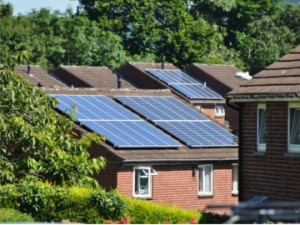
Market research by international information company IHS has predicted the state of the home energy storage market will rapidly improve from its present state; nearly doubling by 2015 and a ten time overall increase by 2018.
At present the home energy market particularly for grid connected photovoltaic (PV) solar installations is unaffordable to the majority, as Sam Wilkinson, research manager for energy storage at HIS remarked, “the outlook for PV in many major residential solar markets where energy storage is likely to be adopted has weakened considerably during the last year, largely because of reduced government incentives.”
“In situations where a financial justification for adding energy storage to a residential PV system does exist, the business case is highly dependent on several variables, such as the levels of self-consumption that can actually be achieved, and the development of retail electricity rates over the next 20 years,” Wilkinson added.
“The fact that these variables are impossible to ensure and so difficult to predict makes the investment relatively insecure and has further hampered end-user appetite for residential PV energy storage.”
The outlook is set to improve as IHS predicts market improvements towards reducing these inhibitions to the home energy storage market in 2015.
IHS predicts that average Li-ion prices will fall by a further 15%, and the residential PV market will return to growth for the first time in three years. The report predicts a 90% expansion in residential PV energy storage in 2015.
“The three key variables that determine whether it’s economical to add energy storage to a residential PV system to increase self-consumption are the value of the feed-in tariff, the expense of buying electricity from the grid, and the cost of energy storage products. And all of these metrics are moving in the right direction,” Wilkinson commented.
“Although the high cost of batteries means that today in Germany, PV systems without storage offer a greater return on investment than PV systems with storage, IHS predicts that each of these key parameters will have moved to such an extent that this situation will be reversed by 2016.”
Overall the market is set to grow from its present levels of 90mw to 900mw in 2018 with the largest market share for residential PV energy storage by 2018 in Japan contributing 200 MW of installations.