Energy efficient construction has never been so easy, due to the increasing availability of suitable components, concluded speakers at the International Passive House Conference 2015 in Leipzig. Experts from around the world presented the enormous savings potential of certified windows, insulation systems and ventilation systems among other things, and at the same time demonstrated their practical implementation. Lectures demonstrated the importance of well-conceived and consistent action in the building sector for a successful transition to a sustainable energy future.
“Today the investment costs for improved efficiency of building components are exceptionally low; the cost difference is more than compensated through the saved energy costs,” said Dr. Wolfgang Feist, Director of the Passive House Institute. “The products that are required for the construction of highly energy efficient buildings provide a variety of solutions with reference to the type of building, range of functions, area of application and design,” said Feist.
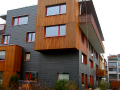
Another focal point of the conference programme were completed projects that exemplify the implementation possibilities. Many Passive Houses in Leipzig and the surrounding region were also visited within the framework of excursions. Representatives of the administration of the City of Leipzig reported on their positive experiences with the construction of schools and kindergartens to the Passive House Standard.
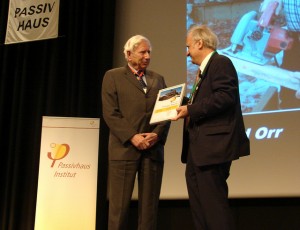
At the conclusion of the International Passive House Conference, yet another prize was awarded; Canadian Harold Orr received the Pioneer Award for his trailblazing work relating to energy efficient construction. In the late 1970s, in collaboration with a broad team of experts, the mechanical engineer experimented with many methods, which are now an established feature of tens of thousands of buildings. The Saskatchewan Conservation House in the town of Regina already had an excellent standard of thermal insulation, an airtight building envelope and, as one of the first in the world, a ventilation system with heat recovery.