Without an overhaul of the UK building stock, the 2050 carbon target will be extremely difficult to achieve, according to Breathing Buildings, a company that specialises in natural ventilation.
With 45 per cent of the UK’s energy consumed by buildings, a more energy-efficient outlook towards building design could play a key part in achieving the carbon target. Strategies like natural ventilation can cut down energy use and, as a result, reduce carbon emissions.
In order for the government to deliver its promise of slashing carbon emissions by 80 per cent, it need to change the way new buildings are designed, and renovate existing units. A recent infographic from Breathing Buildings showed that naturally ventilated buildings use 60 per cent less energy than structures without such a method in place.
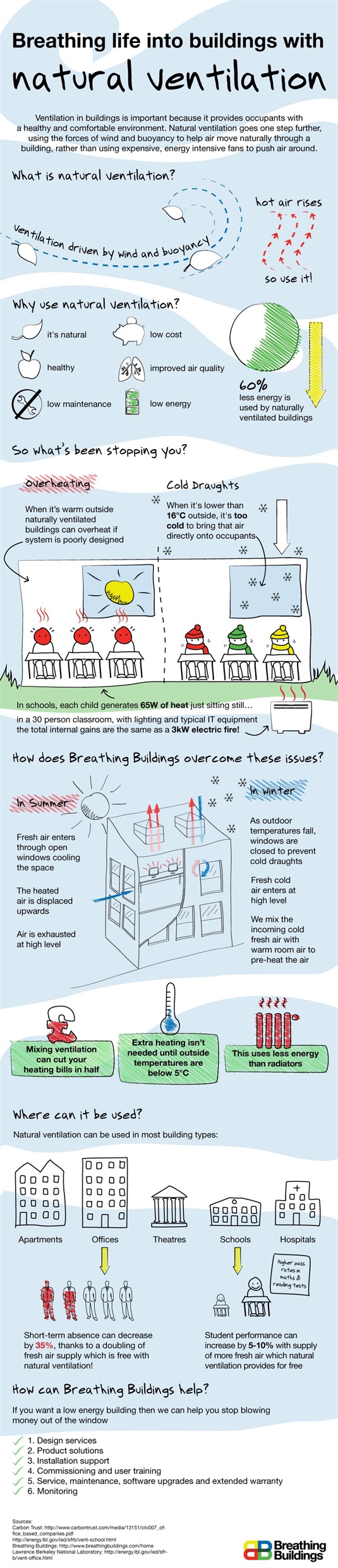
David Wilkinson, Finance and Operations Director, Breathing Buildings, said: “It’s hard to see how a 2050 carbon target can be achieved without an overhaul of the UK building stock, both new and existing. The reductions required in our energy consumption will require us to challenge the bad old ways of doing things, like pumping air down a long narrow duct when we all know that fresh air is just the other side of that window. Other benefits of the system include energy savings, increased productivity, reduced absenteeism and lower maintenance costs.”
As almost half of the UK’s carbon emissions come from its buildings, perhaps the most effective route would be to tackle the problem at its core, the structure’s design.
One way architects can achieve this is through the integration of a natural ventilation system into a facility. This method uses just 40 per cent of the energy that is consumed by a traditional mechanically ventilated air conditioned unit.
Therefore, it can significantly reduce the amount of emissions produced by a building through using the forces of wind and buoyancy to create a flow of fresh air through a facility.
Moving forward, each sector of industry is going to be held responsible for their carbon emissions, especially with the government’s carbon budgets set in place.
The budget for the current four year period (2013 to 2017) is 2,782 MtCO2e and, according to the government, where one sector increases its designated output, another will have to help accommodate this rise.
Here, firms and companies looking to build new offices can help meet the carbon target by considering the benefits that natural ventilation can offer their buildings.
The removal of mechanical systems is the driving factor behind natural ventilation helping reduce the amount of carbon emissions. And as this technology generally requires much less maintenance than a standard air conditioning unit, money can be saved in the long run.