Introducing the DROP portable eco-hotel: a innovative structure by In-terra Design that can go anywhere a wheeled vehicle can go. The idea behind the organically designed structure is the suite’s ability to be placed in any spot in the world, and be easily removed afterwards without any ecological damage from its presence.
The eco-hotel regards itself as an example of sustainable architecture with a high degree of design. Each unit – constructed from prefabricated wood and steel components – has 275 square feet of space, enough for a lounge area and a bedroom, as well as a separate bathroom with toilet, shower and bath.
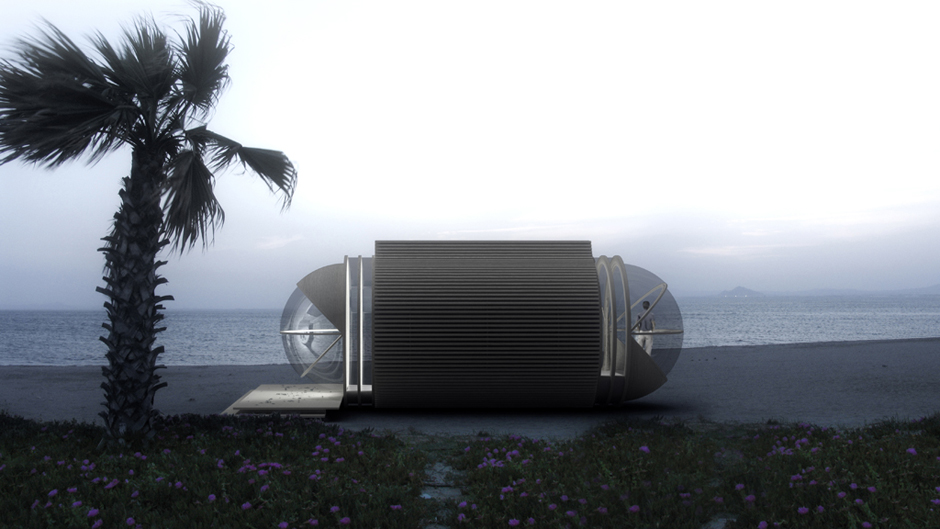
The structure is raised above the ground on steel legs to minimize its impact on the land, and there is a thin film solar panelling incorporated into the roof which provides off the grid electricity and a rainwater collection system that helps provide fresh water for the guests. A dramatic skylight runs the length of the structure to provide plenty of natural sunlight during the day and views of the moon and stars at night.
]]>In 2014, Lincoln council put aside £15m which would fund the creation of 150 new council houses by March 2016.
‘‘We’ll be looking to achieve the highest level of energy efficiency for new homes to keep costs down for tenants. These are valuable additional homes that will meet some of the very high demand we have for all types of housing,’’ explained Pete West, portfolio holder for housing at Lincoln council.
‘‘Our house building programme is a hugely important initiative given that nearly 3,000 people are registered on our council house waiting list,’’ continued West.
Now the scheme is more than just a piece of paper, as five of the twenty new bungalows are already being built by construction firm Woodhead Living, a group that specialise in creating homes that are sustainable.
‘‘We know how important bungalows are to meet the local need, and appreciate what these properties will be able to offer local residents. The fact that we are also able to use smart and sustainable construction methods to tackle fuel poverty is rewarding and the city council should be commended for its forward thinking,’’ commented Michael Broadhurst, Project Coordinator for Woodhead Living.
]]>By adding the capability of the WHS100 Wireless Sensor to its product portfolio, Daintree Networks continues to build on its wireless control solution for lighting and multiple applications beyond lighting, such as thermostats, fans, plug loads, and more.
Using open standards ZigBee PRO wireless communications, the WHS100 operates seamlessly with other standard ZigBee PRO wireless products in the Daintree ControlScope ecosystem to provide advanced lighting control, such as smart scheduling, daylight harvesting, task tuning and more, in addition to occupancy-based control. With built-in metering, the WHS100 can monitor and measure the energy consumption of the lighting load being controlled, and also enable automatic fault detection.
Danny Yu, Daintree Networks CEO said,
]]>“The introduction of the WHS100 is Daintree Networks’ response to the industry need and is reflective of the aggressive development of the Enterprise Internet of Things, or E-IoT. Integrating sensors with wireless connectivity dramatically reduces the cost to control industrial and outdoor fixtures and makes it even easier to roll out our solution. Through Daintree’s ControlScope, we provide the software and wireless foundation to control lights and so much more. The move into fully-embedded, multiple-application control exemplifies the company’s vision to enable the E-IoT for our customers.”
The data center, located in Moses Lake, Washington, will ultimately support up to 30 megawatts of IT load on the site, with an initial ramp to 8 megawatts.
“CenturyLink’s new low-cost power data center services provide many benefits to our customers, including a highly resilient solution coupled with power costs and efficiency metrics that rank among the best in the industry, and the facility serves as an excellent disaster recovery location,” said David Meredith, senior vice president, CenturyLink. “Enterprises enjoy global access to CenturyLink’s portfolio of cloud and managed hybrid IT services, and we continue to extend the reach of our data center footprint to new markets to meet from the needs of our customers.”
CenturyLink’s commitment to environmental sustainability continues with the central Washington project. The facility’s electricity is supplied, in part, by hydroelectric generators powered by the nearby Columbia River. The central Washington climate also allows significant use of free-air cooling, driving some of the lowest power usage effectiveness (PUE) figures in the data center industry.
The central Washington facility offers on-site data center and network services, and includes access to cloud, colocation and managed services available through CenturyLink’s global data center footprint. The site also has a seismic rating of 2B, the lowest rating in the western United States, making it a key location for disaster recovery solutions.
“The central part of Washington state is one of the geographies in which I see substantial potential for further growth as a data center hub,” said Kelly Quinn, research manager with IDC. “Its potential stems from the area’s abundance of natural, power-generating resources, and its relative immunity from natural disasters. The location should help enable CenturyLink’s new data center to provide customers with the ability to achieve higher levels of density without incurring high power costs. It also may offer customers who are ‘green’ conscious the ability to work with a provider that can satisfy their data center needs with renewable energy sources.”
The property is owned by Server Farm Realty and leased to CenturyLink.
The launch of the central Washington data center comes shortly after CenturyLink announced the first deployment of Bloom Energy fuel cells to power a multi-tenant data center, located in southern California. CenturyLink also is the first company to pursue Management & Operations certification from the Uptime Institute at the global portfolio level.
]]>“As the leading global provider of data center solutions, we’re committed to ongoing efforts that enhance the growth of our clients’ businesses while also minimizing the environmental impact of our increasingly digital world,” said A. William Stein, Digital Realty’s Chief Executive Officer. “The world is increasingly leveraging the economic and social value of being connected digitally, and data centers are the home of the physical infrastructure that underpins the digital world. Our goal is to make it as easy as possible for our clients to select more sustainable data center solutions.”
The white paper, which the company published today, is a planning guide authored by Digital Realty Director of Sustainability Aaron Binkley that identifies the considerations for moving to a clean energy model in the data center, describes the growing importance of sustainability in the data center, provides a definition of “clean” energy, and outlines options for sourcing clean energy.
Update on Sustainability Initiatives
- Energy Efficiency - Digital Realty’s expert staff is dedicated to improving energy efficiency in its data centers. This includes screening assets for low- and no-cost upgrades, as well as capital projects where highly energy-efficient products are given preference during replacement and upgrade. This also results in lower operating costs for its clients. Digital Realty’s participation in the Better Buildings Challenge exemplifies its commitment. The Better Buildings Challenge is a Department of Energy-led initiative to improve energy efficiency in data centers by 20 percent by 2020. For more details on this exciting program, visit Digital Realty’s blog post, Joining the White House’s Better Buildings Challenge.
Digital Realty is also an active contributor to ASHRAE’s efforts to advance data center energy efficiency and sustainability. Paul Finch, Digital Realty’s Senior Technical Director, holds one of 16 voting positions with ASHRAE on the Technical Committee for Mission Critical Facilities, Data Centers, Technology Spaces and Electronic Equipment. This committee takes a global leadership role in developing new publications and standards in energy efficiency and sustainability for the data center industry.
- Cleaner Energy – In January 2015, Digital Realty launched the Clean StartSM program to support its clients’ goals to power their data centers with clean, renewable energy. This was the first industry initiative of its kind offering clean energy options for new leases at no incremental cost. Other data center companies have followed suit, and we’re glad they did.
For calendar year 2014, Digital Realty’s portfolio average fuel mix contained 22% renewables; the company is working with power suppliers and clients to meet its long term goal of powering its data centers with 100% renewable energy. In addition, Digital Realty recently became a signatory to the Corporate Renewable Energy Buyers’ Principles, developed jointly by the World Wildlife Fund and the World Resources Institute. The principles seek to spur progress on resolving the challenges corporations face when buying renewable energy.
- Greener Client Solutions – Digital Realty has a successful track record in sustainability dating back through our history as a company, with more than 40 sustainable “green” building certifications, including the completion of the world’s first LEED gold-certified data center in Chicago in 2007. These data centers are built to best-in-class sustainability standards for energy performance and resource efficiency. This global success story includes projects in the United States, the United Kingdom,Ireland, Singapore and Australia.
A few recent examples of recognition received for the company’s sustainable data center solutions include:
1. North America: Digital Realty’s data center in Austin, Texas – a custom build for ARM Holdings – won a DatacenterDynamicsGreen Data Center award.
2. EMEA: The London-area data center recently launched for our client Rackspace is extremely energy-efficient due primarily to the design of its cooling system, which uses outside air for heat transfer. Since it is an indirect adiabatic solution, it doesn’t actually pull any of the outside air through the equipment on the IT floor.
3. APAC: Digital Realty’s Singapore facility recently received a Green Mark Platinum certification by the Building and Construction Authority (BCA) and Infocomm Development Authority (IDA). This is the first time a colocation data center in Singapore has achieved the Green Mark Platinum level under the category of “Existing Data Center.”
“Digital Realty continues to expand its solutions for clients seeking clean energy, energy efficiency, and sustainability in the data center industry,” said Aaron Binkley, Digital Realty’s Director of Sustainability. “For example, in an article published in 2008, InfoWorld recognized Digital Realty’s CTO and head of Portfolio Operations Jim Smith in its prestigious ‘CTO 25′ list as ‘something of an icon in the tech world as he was among the first – if not the first – in the industry to speak openly about the inner workings of an efficient data center at free how-to seminars and green computing forums.’ We look forward to accelerating our industry leadership in promoting sustainability in the data center.”
]]>“This transaction reinforces Fannie Mae’s commitment to quality, affordable and sustainable rental housing in every market, every day,” said Bob Simpson, Vice President of Fannie Mae’s Multifamily Affordable, Green and Small Loans business. “Fannie Mae is leading the way in providing financing for green properties that are reducing energy and water use, lowering utility costs for owners and tenants, and preserving long term property value.”
The property is an adaptive re-use of a formerly environmentally contaminated lot that previously housed the historicMaplewood Police Station. The Station House was awarded points in efficient water management, green power and use of recycled materials resulting in the LEED New Construction Certification. Additionally, The Station House was strategically developed adjacent to New Jersey Transit’s Maplewood Station, offering an approximately 30-minute, direct access train ride to New York Penn Station.
“The transit-oriented location of The Station House, which is also within walking distance to an array of local amenities in downtown Maplewood, made this high-quality, LEED Certified property an attractive addition to our client’s portfolio,” said Len Kaplan, Managing Director at PREI. “PREI is committed to sustainable real estate investing and management, and practicing good global citizenship in the communities it serves. We are therefore pleased to be able to take advantage of Fannie Mae’s Green Building Certification Pricing Break for the benefit of our client.”
In February, Fannie Mae announced that it would offer a Green Building Certification Pricing Break for multifamily properties that have one of nine eligible green building certifications, including USGBC’s LEED certification, U.S. Environmental Protection Agency’s ENERGY STAR® for multifamily certification, and Home Innovation’s National Green Building Standard.
“We look forward to seeing more property owners pursuing green loans and green building certifications,” said Vince Toye, Executive Vice President, Head of GSE Production at Wells Fargo Multifamily Capital. “Fannie Mae’s pricing reduction is a great incentive.”
]]>The system was developed under a project funded by the Innovation Centre for Sensors & Imaging Systems (CENSIS) to combat the afternoon slump familiar to any office worker, and according to reports, it could be ready for market within a year.
It works by detecting how many people are in a room and adapts its behaviour to make the occupants more comfortable by adjusting air quality and temperature.
Dr Hadi Larijani, GCU senior lecturer in the Department of Computer, Communications & Interactive Systems commented:
]]>“People have traditionally tackled afternoon drowsiness with making a cup of coffee, but in reality the issue tends to be associated with diminishing air quality.Modern building regulations have focused on thermal insulation, so insulating a building to prevent heat loss has the associated effect of preventing any fresh air getting in. That means the people inside are sitting in a room where the oxygen levels are falling throughout the day. Retrofitting air conditioning is expensive and doesn’t really address the central problem of air quality, whereas our system will make intelligent decisions about the conditions in the building and take action to address it. That might involve increasing the flow of air into a particular area where the system thinks it will do the most overall good. We’re not saying it’ll stop coffee cravings altogether, but people may find themselves less dependent on caffeine if the air quality stays at a steady level throughout the day.”
“The industry has changed significantly over the past decade. Building product manufacturers are under the gun to get their products specified in a highly fragmented and depressed marketplace. Architects are requesting Health Product Declarations (HPDs), LEED v4 product documentation, and up-to-date guide specs in order to specify building products. Manufacturers don’t always have specialists in-house to develop this crucial documentation,” said Ron Blank, President of Ron Blank & Associates.
The cornerstone of the marketing package is the architectural specifications program. Ron Blank & Associates team of architects deliver proprietary building product presentations to the top design firms in the country. The presentations increase brand recognition for the manufacturer and help get their building products specified. Ron Blank & Associates is a developer for Apple and has created customized product presentations to assist with the specification efforts.
“Working with Ron Blank & Associates to promote our architectural education outreach program has been a very positive experience. We appreciate the high level of professionalism of their staff, timely follow up and their expertise. It is exactly what we look for when choosing a partner. For two years, Ron Blank & Associates has provided excellent webinar support and marketing; and has been a great asset for our strategic efforts to reach architects for LEED projects,” said Syndi Sim, Director of Marketing at Diamon-Fusion International.
For over thirty years, Ron Blank & Associates has been educating design professionals about building products. Technology, building codes, health and safety regulations, and many other changes have taken place in the construction industry during those decades.Ron Blank & Associates has been at the forefront of the industry educating design professionals via online courses, webinars, and live classroom events.
“With the ever increasing changes and advancement in building product technologies, education is key to allowing design professionals to adopt these changes effectively in their designs so that new challenges can be met and unforeseen consequences can be uncovered early and avoided in the future,” said Landon Boone, Chief Operating Officer for Ron Blank & Associates.
]]>The university expects to save approximately 10% on utilities and nearly $2 million annually when the IBM system is fully deployed across 36 buildings on its Pittsburgh campus.
“On its own, the deployment of this technology will drive significant energy and operational savings with a very attractive return on investment. Just as important, improved building performance enhances the occupant experience and provides a much more effective education and research environment,” said Donald Coffelt, associate vice president for Carnegie Mellon University’s Facilities Management Services. “IBM is a clear leader in the field of advanced building analytics and facilities systems integration. This technology offers us important gains in initiatives related to advanced infrastructure systems research, the Pittsburgh 2030 initiative and a more proactive building and infrastructure management model.”
Buildings are expected to become the largest consumer of global energy by 2025, according to the National Science and Technology Council. Systems such as elevators, HVAC, lighting and alarms constantly report data across building networks. However, most organizations do not use the data as well as they could to monitor overall building performance, identify trends in building use, or improve customer satisfaction.
Carnegie Mellon University will address these challenges by using the new IBM Building Management Center delivered on the IBM SoftLayer cloud to monitor thousands of data points from building automation and control systems. The Building Management Center will also detect system problems such as simultaneous heating and cooling not identified by other means, and proactively trigger corrective actions.
The new technology will be piloted in nine buildings and then extended to 36 buildings across campus. The initial application of the Building Management Center will focus on HVAC systems and later will extend to lighting, water and other utilities. The system is scheduled for full implementation in about three years.
“IBM and Carnegie Mellon University share a commitment to innovation and a rich history of collaboration,” said Wayne Balta, vice president, IBM Corporate Environmental Affairs and Product Safety. “Given CMU’s renown as a world leader in engineering and computer science, this new collaboration for smarter buildings is a natural fit. CMU recognized early on that a college campus shares several things in common with a city. Just as Smarter Cities are using data and analytics to improve diverse aspects of their operations, CMU will harness data and analytics delivered via cloud computing to improve the efficiency and effectiveness of building management across campus. We’ve done this within IBM and know it to be good for our business as well as the environment.”
The Smarter Buildings Initiative supports CMU’s technology-enhanced education and research focus, as well as its commitment to sustainability. The initiative will connect with research already underway at the university’s Smart Infrastructure Institute, of which IBM is a founding partner, and the Center for Building Performance and Diagnostics. In addition, faculty and students affiliated with CMU’s multidisciplinary Metro21 initiative, which seeks to design and develop solutions affecting the economy and quality of life in metropolitan areas, are planning to use data generated from the Building Management Center in their research.
CMU’s work with IBM supports the university’s role as a founding partner in the Oakland expansion of the Green Building Alliance’sPittsburgh 2030 District. Pittsburgh is one of just five U.S. cities to launch 2030 districts, which challenge partner organizations to achieve 50 percent reductions in energy use, water consumption and transportation-related emissions by the year 2030.
The IBM Building Management Center solution is a pre-built solution delivered as a service using IBM’s powerful analytics and asset management capabilities and IBM Global Business Services expertise. The cloud infrastructure connects seamlessly and privately to on-premise sources of data from building systems. It also provides visibility and access for the best performance, scalability and control with the required security.
“This is the newest in a series of cloud-based Smarter Cities management centers including transportation, water and emergency management designed to help organizations quickly begin using their own data for new insight and improved decision making,” saidMichael Dixon, general manager, IBM Smarter Cities. “The Building Management Center is designed for both public and private sector buildings and campuses of all sizes. It delivers a new level of understanding of building assets and energy usage with unprecedented flexibility.”
IBM has established a deep portfolio of Big Data and Analytics technology that spans research and development, solutions and software. IBM has invested $24 billion to build its capabilities in Big Data and Analytics through R&D and more than 30 acquisitions. Today, more than 15,000 analytics consultants, 6,000 industry solution business partners and 400 IBM mathematicians are helping clients use big data to transform their organizations.
]]>Amber Rudd MP, Parliamentary Under Secretary of State for Climate Change, said:
“We have seen an enthusiastic response to our world-first Renewable Heat Incentive. It’s very encouraging that in only a number of months 25,000 people have already taken up the incentive – proving that installing renewable heating can be a real, everyday choice for people’s homes. I now want to see even more energy consumers taking advantage of this opportunity. DECC will be hosting several Roadshows in March – and I would urge everyone to find out which technologies could help you to bring down bills. The RHI aims to help to kick start the renewable heat market, to make it attractive to investment from businesses as well as individuals, so they can enjoy the benefits of renewable heating in terms of having warmer premises or homes, lower bills and reducing their emissions.”
The domestic RHI was launched in April 2014 and is the first scheme of its kind in the world, aimed at helping people install renewable heating systems, so they have warmer homes and lower fuel bills while reducing their emissions.
This innovative scheme pays people for the heat they generate for their homes. It is open to everyone – home owners, social and private landlords, and people who build their own homes. It is available to households both on and off the gas grid.
]]>